Management de Proiect în Construcții pentru Arhitecți
Period
8 September - 17 November 2026
Schedule
18:00 - 22:00
Format
Online Live
What competencies you will demonstrate
By the end of the programme, you can demonstrate concrete competencies applicable on real projects.
Labs
Participants on this course get access to the Europroiect Estate Labs platform. There you work through hands-on labs on the course scenarios, across three difficulty levels. It is not a video catalogue. It is guided practice: you finish a live session, then apply it in the lab.
Why project management in construction has become a mandatory competence
The contemporary architect no longer operates only in the space of creation and design coordination. The construction project has become a complex system in which the architectural solution must be continuously aligned with client requirements, cost, time, risk, quality, resources, permitting, contracts and construction. The architect sits at the intersection of design and management, and the professional profile is evolving toward Lead Architect, with an integrating role. The Project Management Plan and the PDCA cycle become instruments of leadership, not mere administrative artefacts.
Project complexity has increased
The architect must understand and integrate Scope, Schedule, Cost, Quality, Resources, Stakeholders, Procurement and Risk, not design alone.
You coordinate two distinct worlds
The Project Management Team and the Technical Team. Between them you must manage authority, interfaces, information flows and deliverables.
Decisions must be governed
The project requires clear responsibilities, RACI, approval levels, escalation, change control and plan integration.
Design is tied to time and cost
The WBS leads to scheduling and the critical path. The budget leads to the Cost Baseline, EVM and the CPI, SPI and EAC indicators.
Responsibility continues beyond the drawing
Coordination of disciplines, BIM, verification, technical quality, technical assistance and the relationship with construction are part of the project ecosystem.
You think across the full life cycle
From strategic definition and feasibility through concept, permitting, technical development, construction, handover, operation and end of life.
For the architect, project management does not mean abandoning professional identity. It means extending the capacity to turn architectural vision into a deliverable, controllable result. The transition we pursue: from the architect who designs to the architect as project manager, a professional who not only conceives the solution but can integrate and lead its delivery.
Impact & Metrics
Decision-ready benchmarks from global reports.
Projects: success vs failure
How success is measured (measurement trifecta)
Average project performance rate
73.8%
Average across respondents
Construction delivery: schedule & cost overruns
In construction and infrastructure delivery, plan vs execution (schedule & cost) leads to significant variance — which is why baselines and integrated control matter.
Schedule overrun
35%
Overall avg: ~12%
Cost overrun
59%
Overall avg: ~28%
Trainer
Who delivers this programme
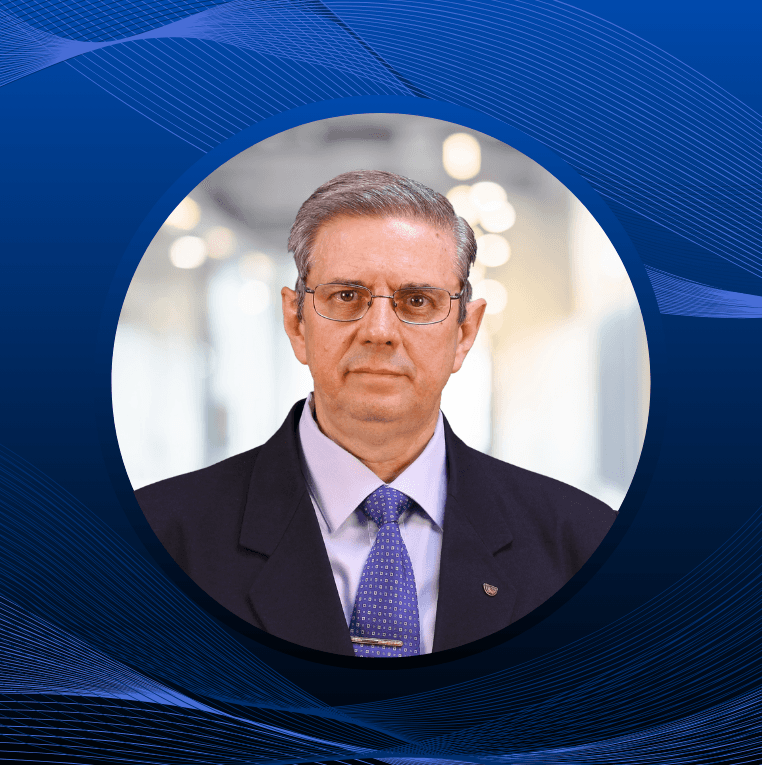
Ing. Marius Gaitan, PMP, PMI-PBA
CEO & President of Europroiect Estate
Ing. Marius Găitan, PMP, PMI-PBA is one of Romania's most respected professionals in project management and business analysis, with over 35 years in business and more than 30 years leading enterprise-level construction projects.
Certified Project Management Professional (PMP®) and Professional in Business Analysis (PMI-PBA®), Marius is internationally recognised for his expertise and direct involvement in developing and improving the global standards of the Project Management Institute (PMI® - USA).
As founder of Europroiect Estate®, Marius Găitan has transformed the organisation into a leader in consulting, training and organisational development, training hundreds of professionals and contributing to modernising project management practice in Romania and internationally.
Through his courses, participants benefit from the expertise of a professional directly involved in writing and reviewing global PMI® standards, which guarantees up-to-date, internationally validated and practically applicable content.
Platform
Europroiect Estate Labs
Participants on this course get access to the Europroiect Estate Labs platform. There you work through hands-on labs on the course scenarios, across three difficulty levels. It is not a video catalogue. It is guided practice: you finish a live session, then apply it in the lab.
- Practical labs dedicated to the course you enrolled on
- Three levels: Easy (foundations), Medium (real project), Hard (decision under constraint)
- Progress at your own pace after live sessions, on the same platform
Easy
Foundations
You build the basics. You complete the right artefact with guidance: a clean WBS, a schedule, a register, a baseline file.
Medium
Project
You assemble the pieces on a project scenario. Dependencies, constraints and real data appear. This is where you see whether you can apply, not just reproduce.
Hard
Decision
A decision with incomplete data, conflict or deviation. You must analyse, choose and document.
Labs access is included for participants on this Live Online course.
What competencies you will demonstrate
By the end of the programme, you can demonstrate concrete competencies applicable on real projects.
Integrated leadership of a construction project
You align design with project objectives, value, cost, time, quality, resources and risks.
Organising the Project Management Team
You define roles, responsibilities, authority and relationships among participants, including through a RACI matrix.
Defining and structuring scope
You turn needs and requirements into Scope, WBS, acceptance criteria and controllable baselines.
Planning and controlling the schedule
You develop the programme, set dependencies, identify the critical path and time reserves, and track the Schedule Baseline.
Planning and controlling costs
You estimate costs, structure the budget and Cost Baseline, and track performance with EVM, CPI, SPI and EAC.
Risk, stakeholders and communication
You identify and analyse stakeholders and risks, define responses, and manage communication, negotiation and conflict.
The Project Management Plan
You integrate the management domains into a single system, tailored to the characteristics of the project.
Coordinating the Technical Team
You integrate architecture and the disciplines, manage interfaces, coordinate the Technical Design and use BIM as a coordination instrument.
Construction life cycle
From strategic definition, feasibility, concept and permitting through technical design, construction, acceptance, handover and operation.
The role of Architect Project Manager / Project Leader
You move from predominantly technical coordination to integrating people, decisions, information, design, cost, time, risk and construction.
Who this programme is for
The programme is for professionals who want to move beyond a design-only perspective and develop the capacity to coordinate, integrate and lead the construction project as a whole.
A good fit if…
- ·Architects who want to extend their competence into construction project management
- ·Experienced architects who already coordinate projects and teams, but want structured, integrated management
- ·Project leads / Lead Architects who coordinate multidisciplinary design and the interfaces among disciplines
- ·Architects involved in Project Management Teams (scope, schedule, costs, quality, resources, stakeholders, procurement, risks)
- ·Architects involved in coordinating the Technical Team, from design and verification through to technical assistance
- ·Architects involved in BIM and digital coordination (ISO 19650, CDE, BEP)
- ·Architects who work for clients, investors or developers
- ·Architects involved in complex public or private projects (governance, procurement, contracts, control)
- ·Project managers with an architectural background who want an approach tied to the specifics of the profession
- ·Architects who aspire to Project Leader roles across the full investment life cycle
In essence, the programme is for the architect who no longer wants to see design alone, but the whole project, and who wants to move from coordinating the architectural solution to integrated leadership of the construction project.
The pedagogical path of the 6 sessions
We do not turn the architect into a project administrator. We develop the path from design professional to integrator and leader of the full construction project.
- 1
You understand the new role
Architect Project Manager
- 2
You lead the project
Scope · Time · Cost
- 3
You integrate management
Quality · Resources · Stakeholders · Procurement · Risk
- 4
You coordinate technically
Design · BIM · Quality · Construction · OHS
- 5
You lead the life cycle
Strategy · Design · Construction · Handover · Operation
- 6
You become Project Leader
Contracts · Liability · Competencies · Leadership
Session-by-session programme
Each session has clear objectives: what you learn and what you apply.
18 September 2026 · Chapters 0-5
The architect as project manager: role, framework and life cycle
Details
8 September 2026 · Chapters 0-5
The architect as project manager: role, framework and life cycle
The first session builds the professional foundation: from project management concepts to the architect's new integrating role, the two teams, the legislative and international framework, and the investment life cycle.
What you learn
- Project management fundamentals: value, project, program, portfolio, governance, stakeholders, constraints and success criteria
- The new role of the Architect Project Manager: the difference among design, technical coordination and integrated leadership
- Organising the two teams: the Project Management Team and the Technical Team
- The applicable legislative framework: the logic of the norms, CATUC, the quality system and the transition regime
- The international framework: PMBOK 8, the ISO 21500 family and the relationship with the Project Management Plan
- The investment project life cycle: 5 stages, 8 phases, control gates
What you apply
- Role profile of the Architect Project Manager
- Integrated project organisation chart and deliverables map
- Legislative compliance matrix and the CATUC / PMBOK / ISO triple-anchor map
- Map of the 8 life-cycle phases
222 September 2026 · Chapters 6-10
Leading the project: governance, scope, time and cost
Details
22 September 2026 · Chapters 6-10
Leading the project: governance, scope, time and cost
The second session develops the mechanisms through which the architect moves from design coordination to project leadership: principles, governance, Scope, WBS, Schedule and Cost.
What you learn
- Principles of leading the Project Management Team: leadership, accountability, culture, value and sustainability
- Project governance: who decides, who approves, escalation, change control
- Defining scope: from need and requirements to Scope Baseline and acceptance criteria
- Building the WBS and requirements traceability
- Planning and controlling time: activities, dependencies, critical path, reserves, milestones, Schedule Baseline
- Planning and controlling costs: estimates, budget, Cost Baseline, EVM (PV, EV, AC, CPI, SPI, EAC)
What you apply
- Governance matrix and RACI
- Scope statement + WBS + requirements traceability matrix
- Overall project schedule and identification of the critical path
- Cost Baseline + EVM performance analysis and EAC forecast
36 October 2026 · Chapters 11-16
Integrated management of project performance
Details
6 October 2026 · Chapters 11-16
Integrated management of project performance
The session brings together the domains that determine performance: quality, resources, stakeholders, communication, procurement and risk, then integrates them into a Management Plan.
What you learn
- Quality management: requirements, prevention, verification, control, acceptance, continuous improvement
- Resource management: team, competencies, materials, equipment, site organisation, levelling
- Stakeholders and communication: power, interest, engagement, negotiation, conflict
- Procurement: make-or-buy, strategy, selection, contracting, risk allocation
- Risk: identification, probability-impact, responses, reserves, monitoring
- Integration and tailoring: the seven domains in a tailored Management Plan
What you apply
- Quality Plan and Resource Plan
- Stakeholder Register + Power-Interest matrix + Communication Plan
- Risk Register + Probability-Impact matrix + response strategies
- Structure of the Integrated Project Management Plan
420 October 2026 · Chapters 17-22
Technical coordination: from design to construction
Details
20 October 2026 · Chapters 17-22
Technical coordination: from design to construction
The session specific to the architectural profession: project management meets design, BIM, technical quality, the site and safety. Focus: Coordinating the Technical Team.
What you learn
- Structure and coordination of the Technical Team: client, designer, checkers, experts, contractor, site supervisor, RTE
- The difference between Project Management and Design Leadership
- Coordinating the multidisciplinary Technical Design: interfaces, clashes, specifications, details
- BIM as a coordination instrument: ISO 19650, CDE, information level, BEP
- Technical quality: verification, hold points, construction control, technical assistance, nonconformities
- Construction coordination and OHS: site organisation, instructions, acceptance, prevention
What you apply
- Matrix of roles, responsibilities and professional attestations of the Technical Team
- Coordination matrix of disciplines and technical interfaces
- Structure of the BIM Execution Plan (BEP) and use of the CDE
- Quality Plan + site dashboard + OHS file
53 November 2026 · Chapters 23-28
Leading the project across the full life cycle
Details
3 November 2026 · Chapters 23-28
Leading the project across the full life cycle
The project as a continuum, from the emergence of the need through to use and end of life. The six chapters walk through the life-cycle phases in sequence.
What you learn
- Phase 0: strategic definition, Strategic Brief, preliminary studies
- Phase 1: Design Brief, feasibility, indicators, the decision to proceed
- Phases 2-3: concept, permitting, PAC, approvals, progressive definition
- Phases 4-5: technical development, PTE, details, transition to construction
- Phase 6: handover, commissioning, acceptance, as-built, defects liability
- Phase 7: operation, maintenance, monitoring over time, end of life
What you apply
- Phase 0 file: strategic justification
- Phase 1 file: Design Brief, feasibility, indicators
- Phase 2-5 files: Concept → Permitting → PTE → Construction
- Handover file + Maintenance and operation plan (Phases 6-7)
617 November 2026 · Chapters 29-31 + Annexes A-F
Professional liability and the architect's transition to Project Leadership
Details
17 November 2026 · Chapters 29-31 + Annexes A-F
Professional liability and the architect's transition to Project Leadership
The final session closes the path: not only how you lead the project, but what you are liable for, in what contractual framework you operate, and what competencies you must demonstrate.
What you learn
- The project's contractual architecture and the relationships among participants
- Professional liability by role: types and limits
- Insurance management as risk transfer
- The transition toward the CATUC framework: from fragmented legislation to an integrated Code and Management Plan
- Competency profile of the Architect Project Manager
- The transition to Project Leadership: from a design focus to leading the project as a whole
What you apply
- Register of contracts, liabilities and insurance
- Migration/transition sheet for the regime applicable to a project
- Self-assessment grid of Architect Project Manager competencies
- Final integrated application: from strategic definition through to handover and operation
What you get on Europroiect Estate Labs
After and alongside the live sessions, you have extended access to practice tools on the platform. No printed course pack: the focus is on application.
Hands-On Labs
Guided practical exercises on the platform, to apply the methods and artefacts from the sessions.
Project ROADMAP
3 months
A guided path on Europroiect Estate Labs to structure a real project step by step.
Code of Practice and Guidance
3 months
A practice and guidance reference for day-to-day project decisions.
PMC ARH
3 months
Access to the PMC resources and framework dedicated to architects, on Europroiect Estate Labs.
COR 242101 certification, Project Manager
On completion, after the final exam, you receive the Certificate of Completion for the occupation Project Manager.
What you receive
Certificate accredited by the Ministry of Education and the Ministry of Labour, together with the descriptive supplement of competencies acquired.
What it means
The diploma and competency certificates are recorded in the employment record (REVISAL) and support employment and pay aligned with this qualification.
The exam
Held with a ministry commission. The exam fee is 450 lei and is not included in the course price.
European certification. For international recognition of certificates obtained in Romania, apostille (Hague Convention countries) or super-legalisation (non-Hague countries) is required.
Course calendar
Scheduled Live Online sessions. Download the calendar to Outlook, Google Calendar or Apple Calendar.
- 8SepC18 September 2026
The architect as project manager: role, framework and life cycle
18:00 - 22:00 - 22SepC222 September 2026
Leading the project: governance, scope, time and cost
18:00 - 22:00 - 6OctC36 October 2026
Integrated project performance management
18:00 - 22:00 - 20OctC420 October 2026
Technical coordination: from design to execution
18:00 - 22:00 - 3NovC53 November 2026
Leading the project across the full life cycle
18:00 - 22:00 - 17NovC617 November 2026
Professional responsibility and the transition to project leadership
18:00 - 22:00
FAQ
What does the course fee include?
The fee includes course materials, online platform access, completion certificates and post-course support.
Can I pay in instalments?
Yes, instalment payments are available. Contact us for details.
How do I access the Live Online course?
You will receive access links and instructions before the course starts.
Will I receive a certificate?
Yes. After successful completion of the course and the final assessment, you receive a recognised certificate of completion.
Enrol in the 2026 cohort
Six live sessions, a clear calendar and access on Europroiect Estate Labs. Choose a payment option and reserve your place.
8 September - 17 November 2026 · 18:00 - 22:00 · 4.500 lei
With bank transfer (OP), you can pay in 3 equal instalments of 1,500 lei during the course.
What you get
- Labs access is included for participants on this Live Online course.
- COR 242101 certification, Project Manager
Next steps
Review the programme details, then enrol with card or bank transfer (OP).
Contact for details